
All Sensex shares, except for Hindustan Unilever, ended with losses. Tata Steel fell the most by 7.33 per cent followed by Larsen & Toubro which cracked 5.78 per cent. Tata Motors, Kotak Mahindra Bank, Mahindra & Mahindra, Infosys, Axis Bank, ICICI Bank, HCL Technologies and HDFC Bank were the other big laggards. Hindustan Unilever ended marginally higher.

'April 9 announcement of slapping a 125% tariff on Chinese goods has brought the focus back to China, making this new phase feel like a repeat of the original conflict.'

Domestic benchmark equity indices may see a positive trading sentiment on Friday thanks to a spectacular rally in world markets after the US President Donald Trump announced to put tariff hikes on hold for 90 days, excluding China from the reprieve. Indian stock markets were closed on Thursday for Shri Mahavir Jayanti. Trump has declared a three-month pause on reciprocal tariffs on non-retaliating countries marking a rather unexpected U-turn after record high levies he imposed led to global stock market meltdown.

Singapore's long-ruling People's Action Party (PAP), led by Prime Minister Lawrence Wong, has secured a landslide victory in the country's general election. The PAP won 87 of 97 seats, with voters endorsing the party's focus on stability and economic security amidst global uncertainties. Wong expressed gratitude for the strong mandate and vowed to tackle concerns about the cost of living and housing. The results mark a significant win for the PAP, which has been in power since Singapore's independence in 1965.
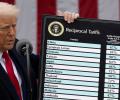
The impact of United States President Donald Trump's reciprocal tariffs is not yet known and New Delhi's strategy to deal with the situation is to firm up a bilateral trade pact with Washington, DC by fall of this year, External Affairs Minister S Jaishankar said on Wednesday.

Parliament's Budget Session will be held from January 31 to April 4, with Finance Minister Nirmala Sitharaman set to table her eighth straight budget on February 1. The session will begin with President Droupadi Murmu's address to a joint sitting of the Lok Sabha and Rajya Sabha on January 31, followed by the tabling of the economic survey. The first part of the Budget Session will have nine sittings from January 31 to February 13, after which Parliament will break for recess to examine the budget proposals. The session will reconvene on March 10 to discuss the demands for grants of various ministries and complete the budgetary process, concluding on April 4.

'Thankfully, as Indians, we have a long history of trans people in our culture, in our religions, in our mythology.' 'It's not a fad which has suddenly come into existence, the way that a lot of Americans treat it.'
'A repo cut will be very good for the market as it will mean that everything is being done to spur growth in these uncertain times.'
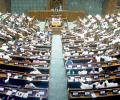
Parliament's approval of the Waqf (Amendment) Bill, a contentious piece of legislation aimed at reforming Waqf bodies, has sparked strong reactions from the opposition, who allege that the bill was "bulldozed" through Parliament. The bill, considered the government's most consequential legislation in its third term, was passed with comfortable majorities in both the Lok Sabha and Rajya Sabha despite opposition claims of a lack of consultation and an intrusion into religious affairs. Other notable bills approved during the session included the Finance Bill, Appropriation Bill, Immigration and Foreigners Bill, and Tribhuvan Sahkari University Bill. The session, which saw high productivity, also witnessed debates on issues such as economic distress, delimitation, and the three-language policy. While the government touted its achievements, the opposition criticized the government's approach and vowed to challenge the Waqf bill in court.

Benchmark BSE Sensex and Nifty closed lower by nearly 1 per cent on Tuesday amid fresh foreign fund outflows and mixed global trends. The 30-share BSE benchmark fell by 497.73 points or 0.89 per cent to settle at 55,268.49, extending its losses for second straight day. During the day, it tanked 562.79 points or 1 per cent to 55,203.43. The broader NSE Nifty declined by 147.15 points or 0.88 per cent to 16,483.85.

'Entering India is exciting, but it's also challenging. You have to be prepared for long-term investment.'

Investors should avoid making drastic changes to their asset allocation during a market correction.
The Trump trade shock is a chance to push long-overdue reforms, rather than tinker with tariffs to appease the US, suggests M Govinda Rao.

'When Prime Minister Modi met President Trump, they agreed to initiate a bilateral trade dialogue.' 'It makes sense to give these negotiations a chance.'

Real estate developers are hoping that the slew of tax concessions announced in Union Budget 2025, set to take effect this financial year, will spur demand for affordable and mid-segment housing, even as the broader housing market shows signs of fatigue.

The world is in the face of a devastating impact due to the coronavirus pandemic and has clearly entered a recession, the International Monetary Fund said on Friday, but projected a recovery next year. "We have reassessed the prospects for growth for 2020 and 2021. It is now clear that we have entered a recession as bad or worse than in 2009. We do project recovery in 2021," IMF Managing Director Kristalina Georgieva told reporters at a news conference.

Information technology (IT) stocks ended at their lowest in nearly nine months after a fresh bout of selling, triggered by concerns over a recession in the US, the key market for domestic software exporters. A report by Morgan Stanley citing risks to growth also weighed on sentiment.

If you redeem your investments when prices have fallen sharply, you will be selling at low prices and may make a permanent loss. On the other hand, if you remain patient and remain invested, you give your investment the time to recover, says Dwaipayan Bose

Equity benchmark indices are facing massive corrections, with the NSE Nifty declining over 14 per cent from its lifetime high hit in September last year due to several negative triggers like stretched valuations, foreign fund exodus, disappointing quarterly earnings and rising global trade tensions dragging markets lower. The BSE benchmark Sensex hit its record peak of 85,978.25 on September 27 last year, and the Nifty also reached a lifetime high of 26,277.35 on the same day.

We have entered a new era in human history, asserts Aakar Patel.

The trigger for international gold prices rising to $3,000 per ounce was Germany's upcoming heavy government borrowing.

Foreign portfolio investors (FPIs) withdrew Rs 14,790 crore ($1.8 billion) from financial stocks in the first half of August, driven by global risk aversion sparked by US recession fears. Additional factors contributing to the decline in banking stocks included subdued earnings growth in the June quarter, concerns about slowing deposit growth, and stricter liquidity norms imposed by the Reserve Bank of India.

'They want to keep the pot boiling all the time.' 'The BJP wants to set a political narrative that the Gandhis are doing wrong things.'

Cooking gas or Liquified Petroleum Gas (LPG) price has been raised by Rs 50 per cylinder by distribution companies, Union Oil Minister Hardeep Singh Puri said on Monday.

It is all about learning new things. The more skills you have, the better your chances of getting hired are, says Sarita Digumarti.

The Indian economy is expected to be "a little weaker" in 2025 despite steady global growth, IMF managing director Kristalina Georgieva has said. Georgieva also said she expects quite a lot of uncertainty in the world this year mainly around the trade policy of the US. In her annual media roundtable with a group of reporters on Friday, she said global growth is expected to be steady in 2025, but with regional divergence.

Recession and tight liquidity has forced Bollywood to go in for cost cutting and slowdown on several projects. Filmmaker Mukesh Bhatt feels that distributors have been severely hit by the recession.
The word 'recession' is being frequently used in India in recent months despite the fact that the economy continues to grow

Foreign investors continued their relentless selling in the Indian equity markets in August, offloading shares worth Rs 21,201 crore due to the unwinding of the yen carry trade, recession fears in the US and ongoing geopolitical conflicts. This came after an inflow of Rs 32,365 crore in July and Rs 26,565 crore in June, data with the depositories showed.

'The economy will pick up in 2020 or a little later... When it picks up, will it reach 10%, 8% or still lower? It all depends on how realistic are the diagnosis and the prescriptions that follow,' says Professor K J Joseph.

India's Parliament is set to begin its Budget session on Friday, with opposition parties poised to demand a discussion on the alleged mismanagement of the Maha Kumbh festival in Prayagraj, where 30 pilgrims died in a stampede. The opposition also accused the government of politicising parliamentary committees and pushing its agenda through its majority. The session will start with President Droupadi Murmu addressing both houses of Parliament. Finance Minister Nirmala Sitharaman will present the Union Budget on Saturday for the eighth consecutive time.

With the earnings season drawing to a close, stock markets will take cues from global trends and foreign investors' trading activity this week, analysts said. The US FOMC (Federal Open Market Committee) minutes will be the major highlight this week, experts said. "This week, there are fewer cues on the macro and micro fronts, as the Q1 earnings season has concluded.

Trump's sweeping tariffs and penalties on China-built ships have turned global shipping into the front line of economic war, observes Shyam G Menon.
The recession scare is back with the United States' economy plunging into another grave crisis.
Union Commerce and Industry Minister Anand Sharma has warned countries trying to introduce protectionist measures that this would not only be counter-productive, but also deepen the recession and delay recovery.

India's e-commerce market alone is projected to reach $200 billion by 2026, making it a prime industry for ambitious entrepreneurs, explains rediffGURU Harsh Bharwani.

How the global recession will affect immigration policy in America.

A look at actors who made and lost money during the last two years.

'In the short term you keep your return expectations very, very low; in the medium term be prepared to invest and in the long term growth will come and your returns from stocks will be high.'

Release of key macroeconomic numbers, monthly derivatives expiry, and global cues are likely to drive stock market movement this week, according to analysts. Markets will also be reacting to remarks made by the US Federal Reserve Chair Jerome Powell, they said. "This week, we expect the market to witness a gradual up-move with stock-specific action.
